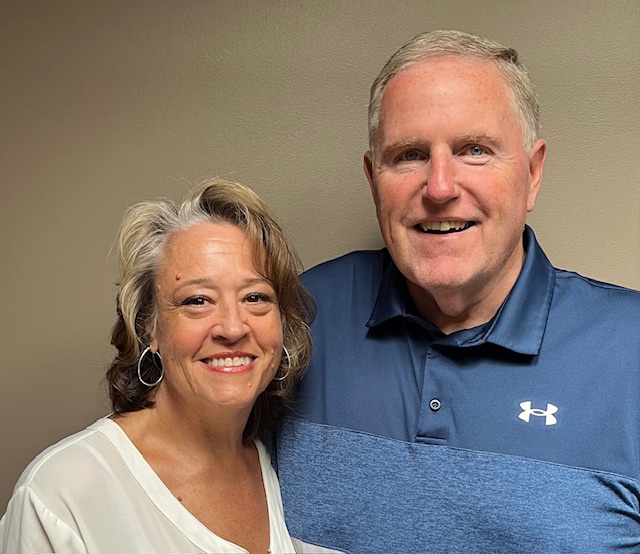
By Jeff & Mary Anne Woofter
This Spot is Reserved… for Grace
We never thought we’d be “those people.” You know, the ones who slowly pull into the handicap spot near the front of the store, flash a blue placard on the mirror, and step out—still smiling, still upright (most days), and very much aware of the stares.
Handicap parking placards aren’t issued on a whim. They come after conversations with doctors, a bit of paperwork, a trip to the DMV and, let’s be honest, a lot of internal wrestling. For us, it felt like admitting that things had changed. That Parkinson’s was no longer a distant diagnosis, but a daily reality.
Jeff was issued a placard over a year ago. But at Mary Anne’s gentle insistence, they’ve only used it once. She always says, “There are others who need it more than we do.” And she’s not wrong. There’s a quiet dignity in pushing yourself a little farther when you can. On good days, walking from the far end of the parking lot becomes a sort of personal victory lap—a small way to say, We’re still moving forward.
We also believe the placard can be used not only when needed, but if needed. Some days, you rise to the challenge. Other days, you accept the help. It’s okay to do both. Living with neurological conditions is a daily dance of knowing your limits and testing them anyway.
It’s important to know that handicap placards are a tool—not a trophy, and certainly not a shortcut. They’re designed for people with mobility issues, balance challenges, neurological disorders, or other medical conditions that make navigating a parking lot feel like crossing a football field in January.
Our advice? If your doctor recommends one, listen. Don’t let pride or fear of judgment stop you from making life a little easier or safer. And if you see someone park in a handicap spot and “look fine,” consider that many disabilities are invisible. Grace, not glare, goes a long way.
These days, we keep the handicap placard stashed in the glove box, and a sense of humor hanging from the rearview. If we’re going to live with Parkinson’s and, now Early Onset Alzheimer’s, we might as well walk as far as we safely can and help those that need to be close.
Until next time,
Jeff & Mary Anne
Life with the Parkinheimers
This Spot is Reserved… for Grace
We never thought we’d be “those people.” You know, the ones who slowly pull into the handicap spot near the front of the store, flash a blue placard on the mirror, and step out—still smiling, still upright (most days), and very much aware of the stares.
Handicap parking placards aren’t issued on a whim. They come after conversations with doctors, a bit of paperwork, a trip to the DMV and, let’s be honest, a lot of internal wrestling. For us, it felt like admitting that things had changed. That Parkinson’s was no longer a distant diagnosis, but a daily reality.
Jeff was issued a placard over a year ago. But at Mary Anne’s gentle insistence, they’ve only used it once. She always says, “There are others who need it more than we do.” And she’s not wrong. There’s a quiet dignity in pushing yourself a little farther when you can. On good days, walking from the far end of the parking lot becomes a sort of personal victory lap—a small way to say, We’re still moving forward.
We also believe the placard can be used not only when needed, but if needed. Some days, you rise to the challenge. Other days, you accept the help. It’s okay to do both. Living with neurological conditions is a daily dance of knowing your limits and testing them anyway.
It’s important to know that handicap placards are a tool—not a trophy, and certainly not a shortcut. They’re designed for people with mobility issues, balance challenges, neurological disorders, or other medical conditions that make navigating a parking lot feel like crossing a football field in January.
Our advice? If your doctor recommends one, listen. Don’t let pride or fear of judgment stop you from making life a little easier or safer. And if you see someone park in a handicap spot and “look fine,” consider that many disabilities are invisible. Grace, not glare, goes a long way.
These days, we keep the handicap placard stashed in the glove box, and a sense of humor hanging from the rearview. If we’re going to live with Parkinson’s and, now Early Onset Alzheimer’s, we might as well walk as far as we safely can and help those that need to be close.
Until next time,
Jeff & Mary Anne
Life with the Parkinheimers
This Spot is Reserved… for Grace
We never thought we’d be “those people.” You know, the ones who slowly pull into the handicap spot near the front of the store, flash a blue placard on the mirror, and step out—still smiling, still upright (most days), and very much aware of the stares.
Handicap parking placards aren’t issued on a whim. They come after conversations with doctors, a bit of paperwork, a trip to the DMV and, let’s be honest, a lot of internal wrestling. For us, it felt like admitting that things had changed. That Parkinson’s was no longer a distant diagnosis, but a daily reality.
Jeff was issued a placard over a year ago. But at Mary Anne’s gentle insistence, they’ve only used it once. She always says, “There are others who need it more than we do.” And she’s not wrong. There’s a quiet dignity in pushing yourself a little farther when you can. On good days, walking from the far end of the parking lot becomes a sort of personal victory lap—a small way to say, We’re still moving forward.
We also believe the placard can be used not only when needed, but if needed. Some days, you rise to the challenge. Other days, you accept the help. It’s okay to do both. Living with neurological conditions is a daily dance of knowing your limits and testing them anyway.
It’s important to know that handicap placards are a tool—not a trophy, and certainly not a shortcut. They’re designed for people with mobility issues, balance challenges, neurological disorders, or other medical conditions that make navigating a parking lot feel like crossing a football field in January.
Our advice? If your doctor recommends one, listen. Don’t let pride or fear of judgment stop you from making life a little easier or safer. And if you see someone park in a handicap spot and “look fine,” consider that many disabilities are invisible. Grace, not glare, goes a long way.
These days, we keep the handicap placard stashed in the glove box, and a sense of humor hanging from the rearview. If we’re going to live with Parkinson’s and, now Early Onset Alzheimer’s, we might as well walk as far as we safely can and help those that need to be close.
Until next time,
Jeff & Mary Anne
Life with the Parkinheimers
This Spot is Reserved… for Grace
We never thought we’d be “those people.” You know, the ones who slowly pull into the handicap spot near the front of the store, flash a blue placard on the mirror, and step out—still smiling, still upright (most days), and very much aware of the stares.
Handicap parking placards aren’t issued on a whim. They come after conversations with doctors, a bit of paperwork, a trip to the DMV and, let’s be honest, a lot of internal wrestling. For us, it felt like admitting that things had changed. That Parkinson’s was no longer a distant diagnosis, but a daily reality.
Jeff was issued a placard over a year ago. But at Mary Anne’s gentle insistence, they’ve only used it once. She always says, “There are others who need it more than we do.” And she’s not wrong. There’s a quiet dignity in pushing yourself a little farther when you can. On good days, walking from the far end of the parking lot becomes a sort of personal victory lap—a small way to say, We’re still moving forward.
We also believe the placard can be used not only when needed, but if needed. Some days, you rise to the challenge. Other days, you accept the help. It’s okay to do both. Living with neurological conditions is a daily dance of knowing your limits and testing them anyway.
It’s important to know that handicap placards are a tool—not a trophy, and certainly not a shortcut. They’re designed for people with mobility issues, balance challenges, neurological disorders, or other medical conditions that make navigating a parking lot feel like crossing a football field in January.
Our advice? If your doctor recommends one, listen. Don’t let pride or fear of judgment stop you from making life a little easier or safer. And if you see someone park in a handicap spot and “look fine,” consider that many disabilities are invisible. Grace, not glare, goes a long way.
These days, we keep the handicap placard stashed in the glove box, and a sense of humor hanging from the rearview. If we’re going to live with Parkinson’s and, now Early Onset Alzheimer’s, we might as well walk as far as we safely can and help those that need to be close.
Until next time,
Jeff & Mary Anne
Life with the Parkinheimers
This Spot is Reserved… for Grace
We never thought we’d be “those people.” You know, the ones who slowly pull into the handicap spot near the front of the store, flash a blue placard on the mirror, and step out—still smiling, still upright (most days), and very much aware of the stares.
Handicap parking placards aren’t issued on a whim. They come after conversations with doctors, a bit of paperwork, a trip to the DMV and, let’s be honest, a lot of internal wrestling. For us, it felt like admitting that things had changed. That Parkinson’s was no longer a distant diagnosis, but a daily reality.
Jeff was issued a placard over a year ago. But at Mary Anne’s gentle insistence, they’ve only used it once. She always says, “There are others who need it more than we do.” And she’s not wrong. There’s a quiet dignity in pushing yourself a little farther when you can. On good days, walking from the far end of the parking lot becomes a sort of personal victory lap—a small way to say, We’re still moving forward.
We also believe the placard can be used not only when needed, but if needed. Some days, you rise to the challenge. Other days, you accept the help. It’s okay to do both. Living with neurological conditions is a daily dance of knowing your limits and testing them anyway.
It’s important to know that handicap placards are a tool—not a trophy, and certainly not a shortcut. They’re designed for people with mobility issues, balance challenges, neurological disorders, or other medical conditions that make navigating a parking lot feel like crossing a football field in January.
Our advice? If your doctor recommends one, listen. Don’t let pride or fear of judgment stop you from making life a little easier or safer. And if you see someone park in a handicap spot and “look fine,” consider that many disabilities are invisible. Grace, not glare, goes a long way.
These days, we keep the handicap placard stashed in the glove box, and a sense of humor hanging from the rearview. If we’re going to live with Parkinson’s and, now Early Onset Alzheimer’s, we might as well walk as far as we safely can and help those that need to be close.
Until next time,
Jeff & Mary Anne
Life with the Parkinheimers
This Spot is Reserved… for Grace
We never thought we’d be “those people.” You know, the ones who slowly pull into the handicap spot near the front of the store, flash a blue placard on the mirror, and step out—still smiling, still upright (most days), and very much aware of the stares.
Handicap parking placards aren’t issued on a whim. They come after conversations with doctors, a bit of paperwork, a trip to the DMV and, let’s be honest, a lot of internal wrestling. For us, it felt like admitting that things had changed. That Parkinson’s was no longer a distant diagnosis, but a daily reality.
Jeff was issued a placard over a year ago. But at Mary Anne’s gentle insistence, they’ve only used it once. She always says, “There are others who need it more than we do.” And she’s not wrong. There’s a quiet dignity in pushing yourself a little farther when you can. On good days, walking from the far end of the parking lot becomes a sort of personal victory lap—a small way to say, We’re still moving forward.
We also believe the placard can be used not only when needed, but if needed. Some days, you rise to the challenge. Other days, you accept the help. It’s okay to do both. Living with neurological conditions is a daily dance of knowing your limits and testing them anyway.
It’s important to know that handicap placards are a tool—not a trophy, and certainly not a shortcut. They’re designed for people with mobility issues, balance challenges, neurological disorders, or other medical conditions that make navigating a parking lot feel like crossing a football field in January.
Our advice? If your doctor recommends one, listen. Don’t let pride or fear of judgment stop you from making life a little easier or safer. And if you see someone park in a handicap spot and “look fine,” consider that many disabilities are invisible. Grace, not glare, goes a long way.
These days, we keep the handicap placard stashed in the glove box, and a sense of humor hanging from the rearview. If we’re going to live with Parkinson’s and, now Early Onset Alzheimer’s, we might as well walk as far as we safely can and help those that need to be close.
Until next time,
Jeff & Mary Anne
Life with the Parkinheimers
This Spot is Reserved… for Grace
We never thought we’d be “those people.” You know, the ones who slowly pull into the handicap spot near the front of the store, flash a blue placard on the mirror, and step out—still smiling, still upright (most days), and very much aware of the stares.
Handicap parking placards aren’t issued on a whim. They come after conversations with doctors, a bit of paperwork, a trip to the DMV and, let’s be honest, a lot of internal wrestling. For us, it felt like admitting that things had changed. That Parkinson’s was no longer a distant diagnosis, but a daily reality.
Jeff was issued a placard over a year ago. But at Mary Anne’s gentle insistence, they’ve only used it once. She always says, “There are others who need it more than we do.” And she’s not wrong. There’s a quiet dignity in pushing yourself a little farther when you can. On good days, walking from the far end of the parking lot becomes a sort of personal victory lap—a small way to say, We’re still moving forward.
We also believe the placard can be used not only when needed, but if needed. Some days, you rise to the challenge. Other days, you accept the help. It’s okay to do both. Living with neurological conditions is a daily dance of knowing your limits and testing them anyway.
It’s important to know that handicap placards are a tool—not a trophy, and certainly not a shortcut. They’re designed for people with mobility issues, balance challenges, neurological disorders, or other medical conditions that make navigating a parking lot feel like crossing a football field in January.
Our advice? If your doctor recommends one, listen. Don’t let pride or fear of judgment stop you from making life a little easier or safer. And if you see someone park in a handicap spot and “look fine,” consider that many disabilities are invisible. Grace, not glare, goes a long way.
These days, we keep the handicap placard stashed in the glove box, and a sense of humor hanging from the rearview. If we’re going to live with Parkinson’s and, now Early Onset Alzheimer’s, we might as well walk as far as we safely can and help those that need to be close.
Until next time,
Jeff & Mary Anne
Life with the Parkinheimers
This Spot is Reserved… for Grace
We never thought we’d be “those people.” You know, the ones who slowly pull into the handicap spot near the front of the store, flash a blue placard on the mirror, and step out—still smiling, still upright (most days), and very much aware of the stares.
Handicap parking placards aren’t issued on a whim. They come after conversations with doctors, a bit of paperwork, a trip to the DMV and, let’s be honest, a lot of internal wrestling. For us, it felt like admitting that things had changed. That Parkinson’s was no longer a distant diagnosis, but a daily reality.
Jeff was issued a placard over a year ago. But at Mary Anne’s gentle insistence, they’ve only used it once. She always says, “There are others who need it more than we do.” And she’s not wrong. There’s a quiet dignity in pushing yourself a little farther when you can. On good days, walking from the far end of the parking lot becomes a sort of personal victory lap—a small way to say, We’re still moving forward.
We also believe the placard can be used not only when needed, but if needed. Some days, you rise to the challenge. Other days, you accept the help. It’s okay to do both. Living with neurological conditions is a daily dance of knowing your limits and testing them anyway.
It’s important to know that handicap placards are a tool—not a trophy, and certainly not a shortcut. They’re designed for people with mobility issues, balance challenges, neurological disorders, or other medical conditions that make navigating a parking lot feel like crossing a football field in January.
Our advice? If your doctor recommends one, listen. Don’t let pride or fear of judgment stop you from making life a little easier or safer. And if you see someone park in a handicap spot and “look fine,” consider that many disabilities are invisible. Grace, not glare, goes a long way.
These days, we keep the handicap placard stashed in the glove box, and a sense of humor hanging from the rearview. If we’re going to live with Parkinson’s and, now Early Onset Alzheimer’s, we might as well walk as far as we safely can and help those that need to be close.
Until next time,
Jeff & Mary Anne
Life with the Parkinheimers