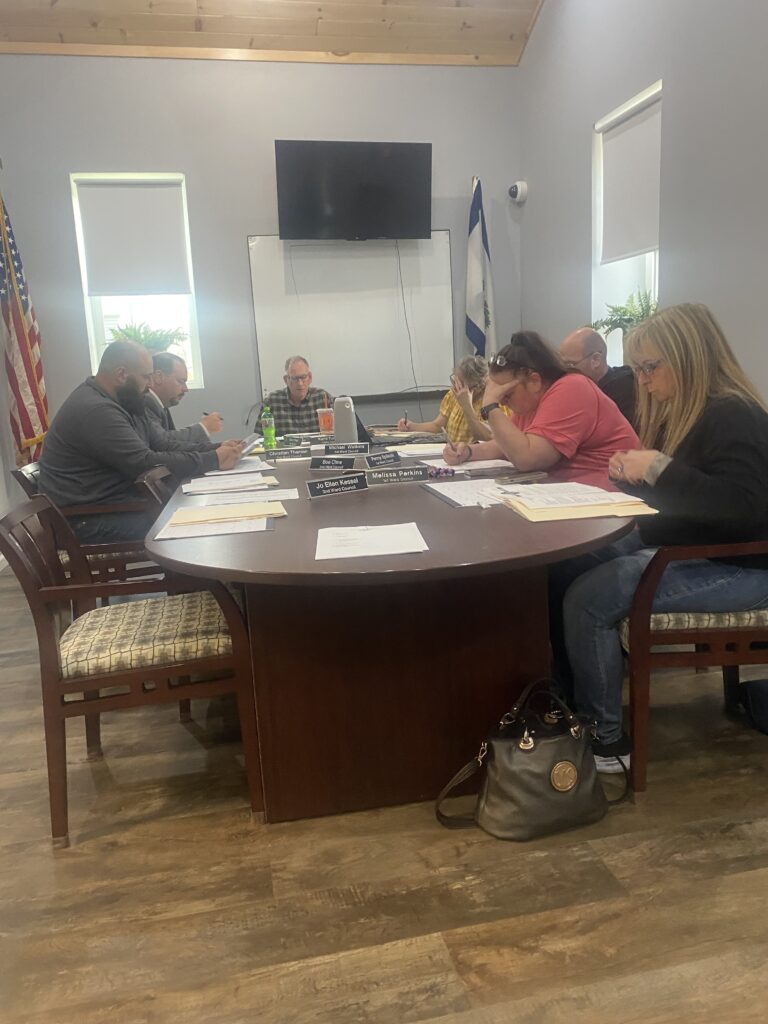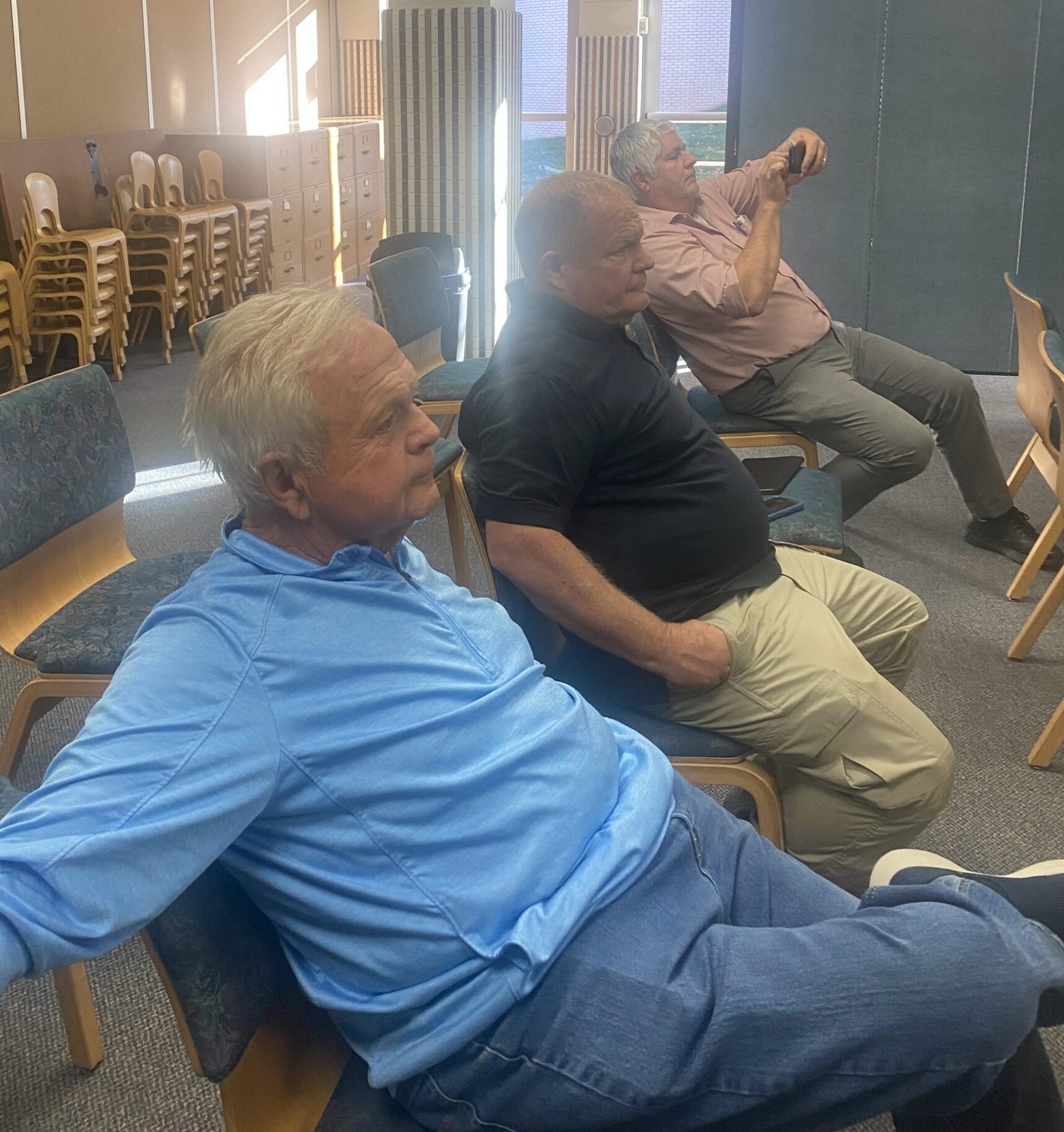
An informational meeting sponsored by an environmental advocacy group at the Mary Weir Library revealed there are more questions than answers to Tenaska’s application to build two wells in Northern Hancock County. The crowd at the meeting was sparse, but the questions were on target and included the following;
**Who is Tenaska, LLC and how many Carbon-Capture sequestration wells do they have in operation?
**Why did the Omaha-based energy company select northern Hancock County as a site for two wells given the small size of the county and the terrain of the area?
**What is the long-term safety of these wells?
Dr. Randi Pokhadnik and Leatra Harper of the FreshWater Accountability Project presented their concerns about the project in Hancock County and others Tenaska is pursuing in Ohio and Pennsylvania to those in attendance.
While Tenaska has hosted dinners and open houses for land owners by invitation only, the general public and the media has not been provided with pertinent detail?
Like where or when?
At a time when both the governmental and corporate sectors strive for transparency, Tenaska will not reveal the names of the landowners who have signed over the rights for a test well to constructed on their property? Scott Murray, project manager for Tenaska, said they want anyone with questions to come directly to Tenaska not the landowners. The application would include the name and the location of the wells, but tracking down the applications has been futile. Calls to the West Virginia DEP’s Public Relations’ officer Terry Fletcher over a two-day period were not returned leaving no alternative for this writer but to file a Freedom of Information Act (FOIA) to get the necessary information.
Since West Virginia established primacy, the application no longer needs to go through the Federal EPA. The approval process has become more streamlined meaning that knowing where the application is in the process is vital. While publication of a legal noting individuals can call for a public hearing on the issue must be done, concerned residents and area representatives need to make sure the public hearing is located in Northern Hancock County and is widely publicized.
With Tomlinson Run State Park a valuable resource in the area, residents should also be aware that on April 30,2025, Gov. Patrick Morrisey signed SB 626 into law. The bill allows companies to lease the subsurface land beneath state parks for CO2 storage meaning Tomlinson Run State Park could be a site.
Both Ted Arneault and his brother, Patrick Arneault, were present at the session. Their company, Century Oil & Gas has drilled over 300 wells in the Ohio Valley during the Century’s existence. The concerns about the impact of the wells on Northern Hancock County should be taken seriously according to Patrick Arneault.
“They are real concerns, “ said Patrick. “Hancock County is too small for this project. Our water lines are always an issue and we have so many wells. Newell and Mtr. are on wells.”
Ted Arneault noted that with the West Virginia DEP a permitting agency, the applications must be a public record making the information accessible to residents.
County Commissioner Tommy Ogden was present and voiced his concerns. Ogden has researched the technology and has been vocal in communicating his concerns to his constituents through Facebook.
On its web-site, Tenaska said it has four decades of experience in the technology.. But no CCS wells are listed as operating.
The FreshWater organization listed some of the questions on the project and technology that need to be answered prior to the application being considered?
Will there be 4-mile safety zone?
Will the projects be able to claim eminent domain?
Will Plume molding be done?
How many jobs will be created other than construction jobs?
Will there be legislation protecting landowners?
How will orphan wells be taken care of?
What formation are they going through?
Will forced pooling be enforced on these projects?
Who will assume liability for carbon dioxide?
What are the risks and long-term landownerr liabilities if a property owner leases for pore space for carbon capture and sequestration? How will property values be affected if C02 is stored beneath a property?
Will a landowner be prohibited from entering into an oil and gas lease if their land has been used for CCS?
How will underground and surface sources of drinking water be protected from blow outs and incursions from CO2 injections?
What is the increased seismicity caused by carbon sequestration in the region. Will this increase possibility of earthquakes in the region?
How will local emergency responders be trained and by whom?
Who at West Virginia DEP is trained in the technology and who will be doing inspections of the site?