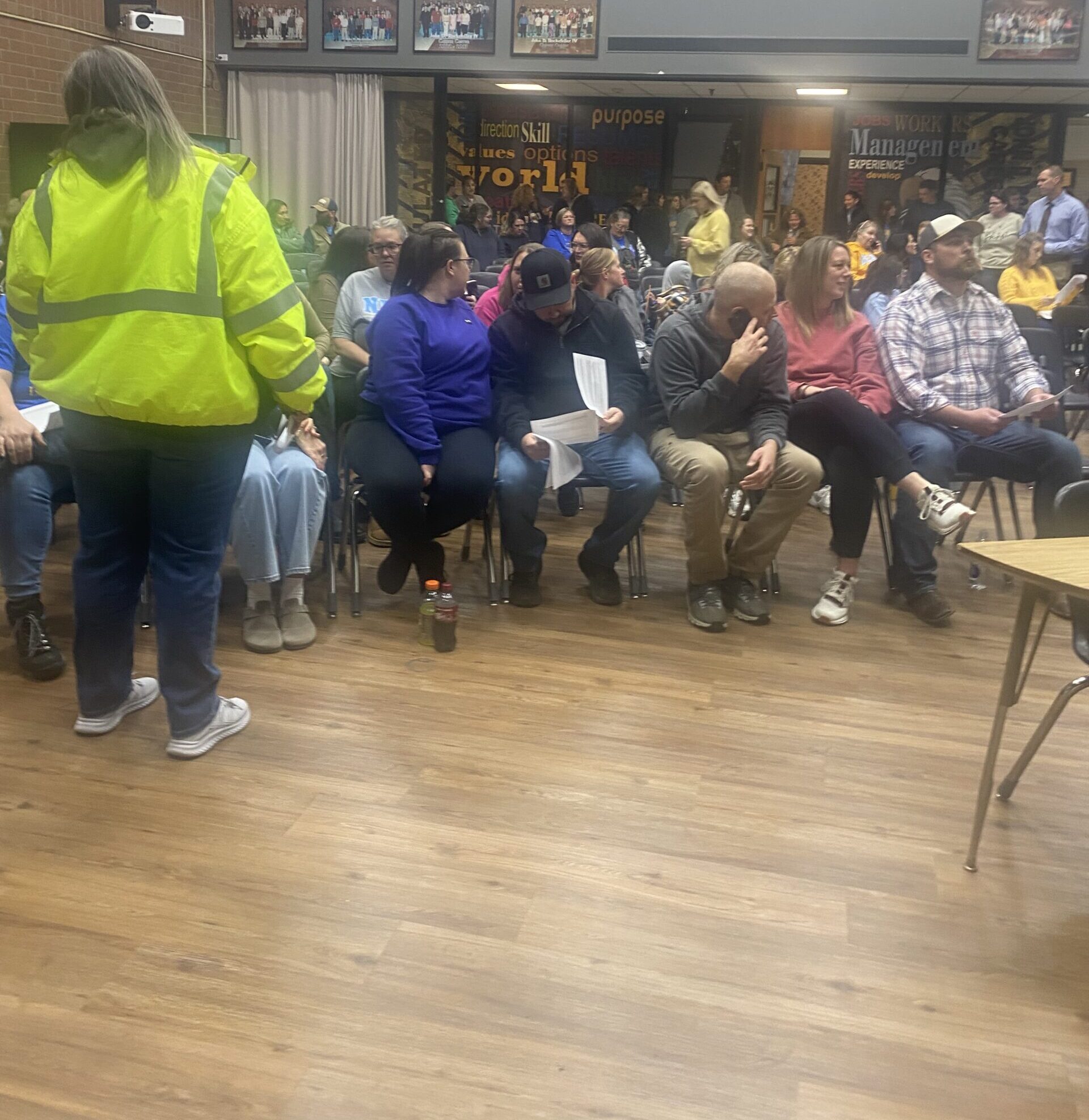
It was a standing-room only crowd which gathered at the JDR Career Center to hear an explanation of why Hancock County’s school system is in financial crisis. The school funding process was explained by Uriah Cummings, CFO of the West Virginia Dept of Education.
Through use of a Powerpoint presentation, Cummings explained that the 85% percent of the County’s budget is spent on personnel (teachers, school service personnel such as aides, bus drivers, custodians, etc). Fifteen% is spent on operating costs.
The amount allocated for staff is according to the student census taken in Oct of the preceding year. Hancock’s census has shown a decline over the past ten years. Hancock’s student census is just under 3,000. The staffing for the schools is 143 positions over the number funded through the State. This year the October census showed 139 over the formula. Local funding is responsible for the salaries of all 143.
Cummings said in earlier years, when Hancock County’s business and industry was booming, they School Board was able to fund those positions. With the demise of the local steel companies and other businesses, the funds to do so evaporated, but the school system continued to fund those positions. Accordingly, there have been no layoffs for ten years. Further complicating the situation was the availability of the COVID funding which Hancock used to fund additional staff.
The deficit has grown due to the loss of students over the years, according to Cummings and has reached $9 million.
Cummings said there are 3 key players in the decision making; the CF0 or Treasurer as it is often known. That individual presents the financial information to the Superintendent and works with him to reconcile staffing with available money from the State; and the Board of Education who must review the financial reports on a monthly and annual basis to ensure the County is in a financially stable position.
Of the five speakers addressing the Board, four very candidly addressed the Superintendent’s and Board’s lack of oversight of the Finances until it became a crisis. Concern over rumors that New Manchester Elementary would be the school selected for closure was addressed by parents of students attending the school
“Where did the money go?” asked parent Reanna Kubrick who attended New Manchester and wants to make sure her children attend that same school. “There are lots of questions that need to be answered. Why wasn’t someone watching spending? Money appears to being spent at a rapid rate.’
“Where was the Board oversight?” asked Matt Cole, who said he had 590 signatures on a petition against the closure of New Manchester Elementary. Cole pointed out that New Manchester is the best elementary school in the County when it comes to test scores and is rated 22nd in the State out of all schools.
The information provided by Cummings gave a very complete picture of how Hancock County came to be in dire financial straights. Those in attendance, however, want to know “why” that was allowed to happen. Was Joe Campanelli, former CFO, not communicating the numbers to the Superintendent? Were the numbers correct? Did Superintendent Dan Enich and superintendents before him, not see the financial crisis building and why was action not taken? Did the Board of Education members not perform their due diligence by reviewing the numbers and for call for reductions in staff years before the crisis reached its current proportions?
The speakers made it clear that they expect a full accounting of how the County reached the financial situation which currently exists.
If there was one common theme that came out of Monday’s meeting from the citizens in attendance, it was “We want answers.”