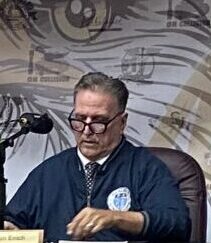
A notice of litigation has been delivered to the State Board of Education by Attorney Eric Frankovitch on behalf of his client, former Hancock County Superintendent Dan Enich. A civil complaint outlining the claims is attached in the communique to the Board. The complaint has yet to be filed, but is formal notice of the Board’s duty to preserve all documents, electronically stored information (ESI) and tangible items relating to Enich from 2023-to present.
The Board meets on Wednesday, April 8 and listed on the agenda is litigation, presumably Enich’s. Included with the letter is the complaint yet to be filed.
Enich was fired from his position on January 16, 2026 in a State Board meeting. Board President Paul Hardesy had harsh words for the Hancock County Board of Education prior to the vote being taken indicating they left the county alone and they “ran the car in the ditch.’
The Hancock Board had fired CFO Joe Campinelli after discovering the county was $10 million in debt and Campinelli had missed deadlines, failed to file reports or draw down money and the County was at risk of not making its payroll.
Immediately after the vote to take over the Hancock County Board was taken State officials were on site as was newlyly appointed Superintendent Walt Saunders whose salary had already been set and his four-year contract agreed upon. Enich and assistant superintendent Dave Smith were relieved of their state cars having to find ride to their homes. County Board members were told they no longer had any power to vote on any issue coming before the Board.
The State Board must confirm in writing with 7 days that they have received the notice and have taken appropriate steps to preserve all responsive information.
The complaint which has not yet been filed in Hancock County Circuit Court has been delivered to the West Virginia Board of Education, follows in it entirety:
DAN ENICH II
Plaintiffs,
vs.
WEST VIRGINIA BOARD OF
EDUCATION and L. PAUL HARDESTY,
individually and in his capacity as President
of the West Virginia Board of Education,
Defendants.
Civil Action No.:
Judge:
COMPLAINT
NOW COMES the Plaintiff, Dan Enich II (“Plaintiff”) by and through the undersigned counsel, and hereby files this Complaint against the Defendants, West Virginia Board of
Education and Larry Paul Hardesty, individually and in his capacity as President of the West
Virginia Board of Education. In support hereof, Plaintiff states and avers as follows:
PARTIES
- Plaintiff Dan Enich II is an adult resident citizen of Brooke County, West
Virginia. - Defendant West Virginia Board of Education (“WVBOE”) is a state agency and
- instrumentality of the State of West Virginia, with its principal place of administration in Charleston, Kanawha County, West Virginia.
- Defendant L. Paul Hardesty is the President (“Board President”), sued in his individual capacity and in his official capacity as President of the West Virginia Board of Education.
2
- At all relevant times, Defendants acted under color of state authority and within the scope of their official roles, except as to actions alleged to be fraudulent, malicious, oppressive, ultra vires, or otherwise outside lawful authority.
JURISDICTION AND VENUE - This Court has subject-matter jurisdiction over Plaintiff’s claims and authority to
grant declaratory and injunctive relief and, to the extent permitted by law, damages. - Venue is proper under W. Va. Code § 14-2-2 because Defendants include a state
agency and state officers, and the causes of action arose in Hancock County, West Virginia. - Venue is also proper under W. Va. Code § 56-1-1 because the causes of action arose in Hancock County, West Virginia.
GENERAL ALLEGATIONS
- The WVBOE’s essential function includes general supervision and oversight of West Virginia public schools and school-system governance, including financial oversight mechanisms and intervention authority.
- Upon information and belief, the WVBOE has recently exercised expanded intervention authority in multiple county school systems, including at least Upshur County, Logan County, Mingo County, Tyler County, Nicholas County, and Boone County. This pattern
created institutional pressure to frame county fiscal crises as exclusively local failures, and to publicly assign blame to identifiable individuals, rather than to acknowledge deficiencies in state-level oversight and supervision. - Plaintiff was employed as Superintendent of Hancock County Schools starting July 1, 2023, under an employment arrangement that included compensation and benefits and contractual terms governing termination.
3
- Longstanding failures in Hancock County Schools’ financial controls and forecasting existed prior to Plaintiff’s tenure, including long-term non-use and/or improper use of West Virginia Education Information System (WVEIS) system in Hancock County Schools.
- The WVBOE knew or should have known of these longstanding deficiencies through access to county audit records, oversight communications, and/or prior indicators of systemic financial risk.
- Throughout Plaintiff’s tenure as Superintendent, he sought to address financial
and compliance issues, including issues related to federal program corrective action and financial
reporting/forecasting, and he reasonably relied on existing financial personnel, audit processes,
and representations in addressing fiscal matters. - On or about September 4, 2025, Plaintiff made a good-faith report to state-levelauthorities concerning an urgent financial crisis and the risk of failure to meet payroll, and this report triggered heightened state involvement and broader discovery of financial mismanagement.
- Plaintiff’s September 4, 2025 report was protected whistleblower conduct concerning wrongdoing and/or waste involving public funds and the lawful administration of a public school system.
- After that September 4, 2025 report, Plaintiff participated in planning and response steps, including interacting with state finance officials and third-party consultants, and developing plans responsive to state-directed fiscal concerns.
- Notwithstanding his report and cooperation, Plaintiff became a target of blame-shifting and retaliation, as Defendants publicly framed the crisis as though Hancock County
Schools had recently and intentionally bypassed WVEIS controls to conceal financial
movements, thereby shifting blame away from state-level oversight failures.
- On or about January 16, 2026, the WVBOE held an emergency meeting and took
action that resulted in Plaintiff’s removal and termination as superintendent. - Contemporaneously with that emergency meeting, Defendant Hardesty publicly implied Plaintiff had intentionally obscured financial information “turn[ing] the lights out.”
Specifically, Defendant Hardesty stated:
“If you don’t want people on the outside to see what’s going on, you turn the lights out, do you not? Hancock County basically turned the lights out on WVEIS.” - Defendant Hardesty also blamed the “malfeasance of the administration” for the financial situation and stated Plaintiff “chose turf over paying people,” implying improper prioritization or misuse of funds.
- Defendant Hardesty also made statements suggesting criminal exposure or threats of criminal charges against Plaintiff connected to the financial issues.
- These statements were stigmatizing and were reasonably understood to accuse Plaintiff of dishonesty, concealment, and/or professional malfeasance in office.
- These statements were false and were published to third parties via public meeting(s), media, online dissemination, and/or official statements.
- Defendants made these statements with knowledge of falsity or reckless disregard for truth, or at minimum negligently, given the information available to state officials about the long-standing nature of WVEIS non-use and the State’s supervisory oversight responsibilities.
- Plaintiff sought a meaningful opportunity to be heard, including requesting an executive session and/or the opportunity to present his full factual explanation, and that he was terminated without adequate process and without a name-clearing opportunity despite the
- existence of stigmatizing public statements.
- Prior to Defendants’ takeover of the Hancock County School Board, the county board engaged a law firm to investigate and pursue recovery of funds arising from the financial mismanagement, including potential claims against the CFO/Treasurer under applicable bonds and the independent accounting firm connected to prior independent audits.
- Immediately after taking control over the Hancock County School Board, on February 4, 2026, Defendants terminated that engagement.
- Plaintiff alleges that halting recovery efforts supports the inference that Defendants preferred narrative management and avoidance of scrutiny over accountability, and that scapegoating Plaintiff was part of a broader cover-up of state oversight failures. Defendants’ stigmatizing statements, combined with Plaintiff’s termination, damaged Plaintiff’s good name and professional standing and impaired his ability to work in his chosen vocation.
- Defendants’ conduct caused damages including, but not limited to, loss of wages and benefits; reputational harm and impairment of future employment prospects; emotional distress; and other consequential damages.
- Plaintiff has acted responsibly and in good faith throughout the financial crisis
response, including seeking to ensure payroll obligations were met and working with counsel,
consultants, and state-level officials in response to unfolding financial information.
COUNT I
Statutory Whistleblower Retaliation
- Plaintiff incorporates all prior paragraphs as if fully set forth herein.
6
- Plaintiff was an “employee” of a “public body” within the meaning of W. Va.
Code § 6C-1-1 et seq., having performed services for remuneration under a contract of hire with a public body. - Plaintiff made a good faith report to appropriate authority(ies) and/or employer agents concerning wrongdoing and/or waste involving public funds and school-system financial management.
- Defendants discharged and retaliated against Plaintiff by removing him and terminating his superintendent employment because of Plaintiff’s reporting and related protected activities, including anticipated participation in investigation and accountability efforts.
- Defendants’ stated or implied reasons were pretextual.
- Plaintiff is entitled to injunctive relief and damages as authorized by W. Va. Code § 6C-1-1 et seq., including reinstatement, back wages, reinstatement of fringe benefits and seniority rights, actual damages, and litigation costs and reasonable attorney fees where
appropriate.
COUNT II
Wrongful Discharge in Violation of Public Policy
- Plaintiff incorporates all prior paragraphs as if fully set forth herein.
- West Virginia public policy prohibits retaliation against public employees who report wrongdoing, waste, and misuse/mismanagement of public funds, and favors transparency
and lawful administration of public education finances. - Terminating a superintendent for reporting an urgent fiscal crisis and seeking corrective action jeopardizes these substantial public policies by chilling reporting and hindering
detection and correction of waste/wrongdoing in public finance.
7
- Plaintiff’s termination was motivated, at least in substantial part, by his
September 4, 2025 report and subsequent efforts to pursue accountability and recovery, as shown by temporal proximity, scapegoating statements, and the State’s later directive to end recovery
efforts. - Defendants lacked an overriding legitimate, nonretaliatory justification; any asserted justification was pretextual and inconsistent with Defendants’ knowledge of longstanding systemic issues and their oversight duties.
- Plaintiff is entitled to all damages and equitable remedies available for wrongful discharge, including emotional distress damages and punitive damages against individual defendants where permitted by law.
COUNT III
Defamation
- Plaintiff incorporates all prior paragraphs as if fully set forth herein.
- Defendants made and published false statements of fact concerning Plaintiff, including but not limited to statements implying Plaintiff intentionally concealed financial information by “turn[ing] off the lights,” and implying Plaintiff chose “turf over paying people,”
and other statements reasonably understood by listeners/readers to accuse Plaintiff of dishonesty, malfeasance, and/or professional misconduct. - The statements were published to third parties, including through public statements and/or media channels, and were not privileged or, alternatively, exceeded any privilege by being made with actual malice and/or common-law malice.
- The statements were false, were of and concerning Plaintiff, and were defamatory per se and/or caused special damages because they imputed dishonesty, concealment, incompetence, and/or malfeasance in public office and injured Plaintiff in his profession.
8
- Defendants acted at least negligently.
- In the alternative, if Plaintiff is deemed a public official/public figure for
defamation-law purposes, Defendants acted with actual malice given access to information contradicting the narrative they published, including longstanding WVEIS non-use and the timing and budgeting history of turf projects. - Plaintiff suffered damages including reputational injury, impairment of
employability, emotional distress, humiliation, and loss of professional opportunities. - Plaintiff seeks compensatory damages, presumed/reputational damages, special damages, and punitive damages.
COUNT IV
False Light Invasion of Privacy
- Plaintiff incorporates all prior paragraphs as if fully set forth herein.
- Defendants gave publicity to matters that unreasonably placed Plaintiff before the public in a false light, including portraying him as engaging in concealment, dishonesty, or misuse of funds, and that the false light would be highly offensive to a reasonable person and
was made with knowledge and/or reckless disregard of falsity. - Plaintiff seeks compensatory and other damages available for false light claims,and equitable relief including correction/retraction and removal of stigmatizing false content
from official records to the extent within Defendants’ control.
COUNT V
Tortious Interference with Business Expectancy
- Plaintiff incorporates all prior paragraphs as if fully set forth herein.
- Plaintiff has a business expectancy in continuing his professional career in education administration and obtaining future employment in his vocation.
9
- Defendants, acting outside any proper privilege and/or using improper means including defamation and false light, intentionally interfered with Plaintiff’s business expectancies by publishing false accusations of dishonesty/malfeasance that foreseeably deter prospective employers and professional bodies from considering Plaintiff.
- The interference caused harm and damages including lost opportunities and reputational injury.
COUNT VI
Deprivation of Due Process under West Virginia Constitution
- Plaintiff incorporates all prior paragraphs as if fully set forth herein.
- Article III, Section 10 of the West Virginia Constitution guarantees due process protections before deprivation of liberty or property.
- Plaintiff alleges Defendants, as a government employer, implicated Plaintiff’s liberty interest in his good name by: (a) making stigmatizing statements; (b) that were false; (c)that were published or made accessible to the public; (d) in connection with a serious adverse
employment action. - Plaintiff alleges that when these elements are met, Plaintiff is entitled to procedural safeguards under Article III, Section 10, including a meaningful opportunity to contest the factual basis and obtain name-clearing relief.
- Defendants terminated Plaintiff and allowed or caused stigmatizing public accusations to persist without providing adequate procedural safeguards and without a name-clearing hearing, thereby depriving Plaintiff of liberty without due process.
- Plaintiff seeks declaratory and injunctive relief, including a name-clearing hearing, expungement/correction of stigmatizing statements from official records as appropriate, and such other prospective relief as the Court deems just and proper.
10
COUNT VII
Declaratory and Injunctive Relief
PRAYER FOR RELIEF
WHEREFORE, Plaintiff respectfully requests that the Court enter judgment in his favor and against Defendants, and award the following relief:
A. Declaratory judgment that Defendants’ acts and omissions, including retaliation for whistleblowing and deprivation of due process, were unlawful.
B. Preliminary and permanent injunctive relief, including: reinstatement, a name-clearing hearing, and correction/expungement of false and stigmatizing statements from official records and personnel files to the extent within Defendants’ control.
C. Back pay, lost benefits, and other make-whole relief.
D. Compensatory damages for lost wages/benefits, reputational harm, emotional distress, and other consequential harms.
E. Actual damages and other relief authorized by the West Virginia Whistle-Blower Law, including litigation costs and reasonable attorney fees as appropriate.
F. Punitive damages against Defendant Hardesty.
G. Pre- and post-judgment interest as allowed by law.
11
H. Costs of suit and such other and further relief as the Court deems just and proper.
JURY DEMAND
Plaintiff demands a trial by jury on all issues triable by jury.PRAYER FOR RELIEF
WHEREFORE, Plaintiff respectfully requests that the Court enter judgment in his favor
and against Defendants, and award the following relief:
A. Declaratory judgment that Defendants’ acts and omissions, including retaliation for whistleblowing and deprivation of due process, were unlawful.
B. Preliminary and permanent injunctive relief, including: reinstatement, a name-clearing hearing, and correction/expungement of false and stigmatizing statements from official records and personnel files to the extent within Defendants’ control.
C. Back pay, lost benefits, and other make-whole relief.
D. Compensatory damages for lost wages/benefits, reputational harm, emotional distress, and other consequential harms.
E. Actual damages and other relief authorized by the West Virginia Whistle-Blower Law, including litigation costs and reasonable attorney fees as appropriate.
F. Punitive damages against Defendant Hardesty.
G. Pre- and post-judgment interest as allowed by law.
11
H. Costs of suit and such other and further relief as the Court deems just and proper.
JURY DEMAND
Plaintiff demands a trial by jury on all issues triable by jury.