Life with the Parkinheimers

Breaking the Silence on Depression

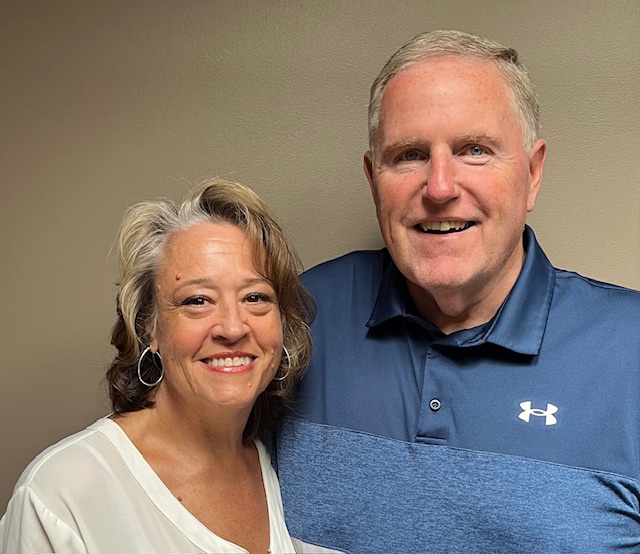
By Jeff & Mary Anne Woofter

When people hear “Parkinson’s disease” or “Alzheimer’s,” they usually think about the  symptoms: tremors, memory loss, balance issues, confusion. What often gets overlooked is the silent partner that walks alongside these diseases, depression.

Depression is one of the most common companions of chronic illness, yet one of the least talked about. Here’s the thing: depression is not weakness. It is not a character flaw. It is not something that can be wished away or conquered by willpower alone. Depression is an illness. Just like Parkinson’s, Alzheimer’s, and any other illness, it deserves treatment, compassion, and understanding.

Our Story

Mary Anne faced her first battle with depression in her mid-thirties. Like so many people, we were blindsided by it. She had suffered two miscarriages, but depression had simply arrived, heavy and relentless, making even the simplest daily tasks feel impossible. Her doctor concluded it was due to a chemical imbalance in her brain. Medication was prescribed  and,  within two weeks, a change for the better was happening.  With the right medication, she found her way back to the light.

My own bouts with depression began later in life, after my Parkinson’s diagnosis in 2018. At first, I thought I could muscle through it. After all, I’d been a college athlete, a sheriff, a teacher, a high school principal and a school superintendent. I knew about grit. I knew about perseverance. But depression doesn’t play by those rules. It doesn’t yield to toughness. Instead, it seeps in quietly, making the days longer, the nights darker, and hope harder to hold onto.

Through a combination of medication and therapy, I’ve been able to manage my depression. But I’d be lying if I said it never comes back. It does, sometimes with no warning. And when it does, I’ve learned that acknowledging it and reaching for support isn’t a sign of failure. It’s a sign of strength. I started working with a wonderful therapist when I lived in Barbour County and I still see him on a regular basis, as needed, through online sessions. Mary Anne will be the first to tell me that it’s time for a “tune-up” with Dr. Williams.

Depression and Chronic Illness: A Heavy Burden

Living with Parkinson’s or Alzheimer’s (or being the caregiver of someone who is) is already a heavy load. The body doesn’t move the way it used to. The brain doesn’t process the way it should. Independence is slowly chipped away. And all of this takes place while the world around you keeps racing ahead as if nothing has changed.

Is it any wonder that depression finds its way in? Research shows that people with Parkinson’s are two to three times more likely to experience depression than the general population. Those with Alzheimer’s and other dementias often experience depression as the disease changes their sense of self and ability to connect with the world.

Depression can worsen the symptoms of these diseases, too. A person with Parkinson’s who is depressed may have slower movements, more fatigue, and less motivation to exercise. For someone with Alzheimer’s, depression can deepen withdrawal, increase confusion, and magnify feelings of hopelessness. It’s a vicious cycle. But cycles can be broken.

Why People Stay Silent

So why don’t we talk about depression more openly? Why do so many people suffer in silence? Part of the reason is stigma. Unlike a broken leg, which everyone can see, depression is invisible. Too often, it’s misunderstood as laziness, weakness, or a lack of willpower. People say things like “Just snap out of it,” or “Think positive,” or “Other people have it worse.” Imagine telling someone with diabetes to “just try harder” to make their blood sugar behave. It sounds absurd, but that’s exactly what we do with mental illness.

Another reason is fear. Fear of being judged. Fear of being seen as “less than.” Fear of admitting that the mind is struggling when the body already is.

But silence is dangerous. Depression untreated can steal joy, rob relationships, and in the darkest moments, even steal lives.

Treatment Can Work

Here’s the good news: depression is treatable. Therapy, medication, support groups, exercise, diet, faith practices, and lifestyle changes can all play a role in recovery. Often, it’s a combination of these things that work best.

Mary Anne’s recovery decades ago came through medication. Mine has come through both medication and talking to a therapist. Others find their turning point in support groups, prayer, music, art, or time in nature. The key is not to give up until you find what works for you.

And just like with Parkinson’s or Alzheimer’s, treatment isn’t about “curing” depression. It’s about managing it and finding ways to live well despite it.

Caregivers and Depression

It’s not only the patients who face depression, caregivers do too. In fact, I would argue that they suffer more in many cases. Caring for someone with a chronic illness is exhausting, emotionally and physically. The constant vigilance, the grief of watching a loved one change, the loneliness, it can wear anyone down.

If you’re a caregiver reading this, please hear this: your mental health matters. You cannot pour from an empty cup. Reaching out for help, whether through counseling, respite care, or simply leaning on friends and family, is not selfish. It’s survival.

Breaking the Stigma

So how do we break the stigma around depression? We talk about it. We share our stories. We remind people that mental health is health. Period.

Mary Anne and I are sharing our journey not because it’s easy, but because it’s necessary. If even one person reading this feels less alone, or picks up the phone to call their doctor, or decides to finally open up to a friend, then it’s worth every word.

There is no shame in depression. The only shame would be in refusing the help that could make life better.

A Final Word of Hope

To anyone reading this who is battling depression alongside a chronic illness, here is our message: you are not alone. Your struggle is real, your pain is valid, and your life still has value, meaning, and purpose, even on the hardest days.

Talk to your doctor. Call a friend. Find a support group. Pray. Walk outside. Take the first step, however small it feels. With treatment and support, depression doesn’t have to define your story.

We may not be able to cure Parkinson’s or Alzheimer’s, but we can fight back against depression. And we can do it together.

So, let’s keep talking, let’s keep listening, and let’s keep reminding each other that hope is stronger than despair, and that no one has to walk this road alone, or in silence.

Until next time,

Jeff & Mary Anne

Life with the Parkinheimers